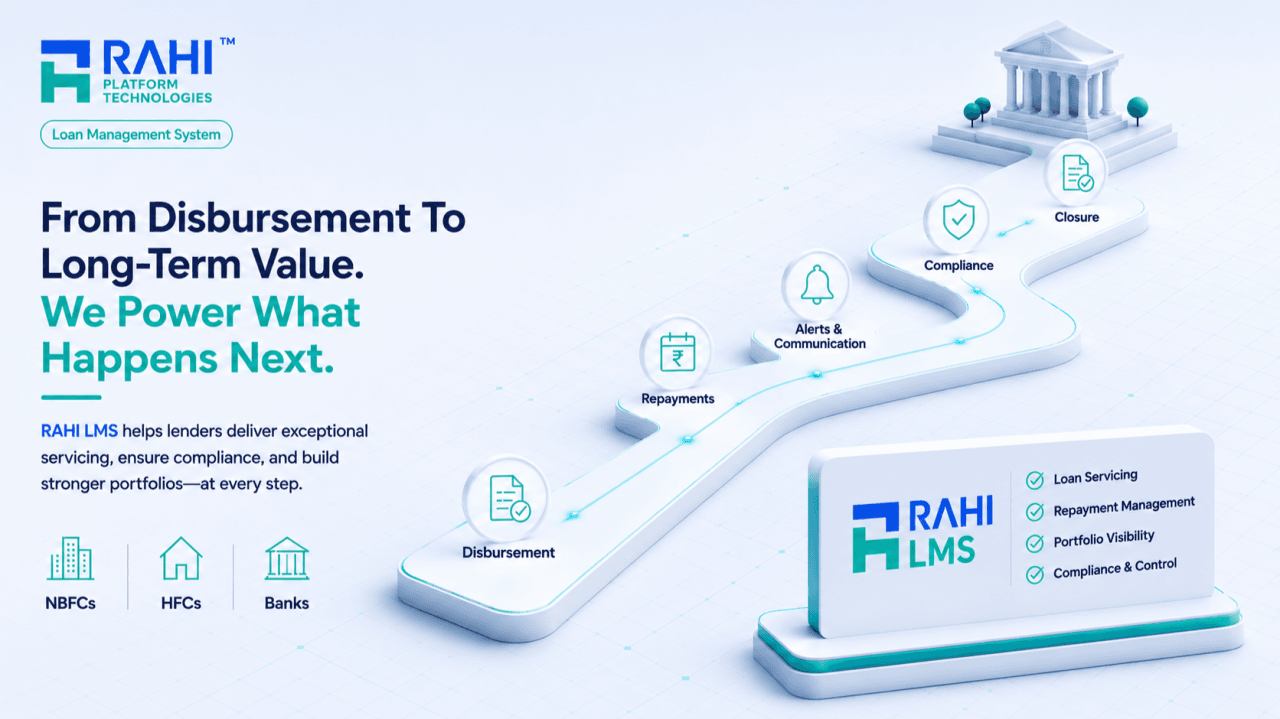
For years, lending transformation has largely focused on one objective—making loan origination faster.
Digital onboarding, automated underwriting, instant verification, and accelerated approvals have transformed how financial institutions acquire customers.
But once a loan is disbursed, a different operational reality begins.
Every repayment collected, every borrower communication, every compliance milestone, every accounting activity, and every servicing request becomes part of an ongoing journey that directly influences portfolio health and customer experience.
The question lenders are increasingly asking is no longer:
"How quickly can we disburse a loan?"
It's becoming:
"How effectively can we manage everything that follows?"
The Operational Complexity Begins After Disbursement
The post-disbursement lifecycle is far more dynamic than it often appears.
Every active loan generates a continuous stream of operational activities that require coordination across multiple teams, systems, and regulatory processes.
These include:
Repayment scheduling and collection tracking
Loan servicing and customer requests
Borrower communications and notifications
Accounting and reconciliation
Compliance monitoring and reporting
Portfolio performance tracking
Loan closure and lifecycle completion
Individually, each process seems manageable.
Collectively, they become one of the most operationally intensive parts of lending.
When Systems Don't Work Together, Operations Become Harder
Many lenders continue to manage servicing activities across multiple applications, spreadsheets, and manual workflows.
As portfolios grow, this fragmentation often results in:
Limited visibility across borrower servicing activities
Manual follow-ups for repayments and customer requests
Time-consuming reconciliation processes
Increased operational dependency on multiple teams
Difficulty maintaining consistent compliance records
Delayed access to portfolio insights
These challenges don't always appear overnight.
They gradually affect operational efficiency, customer experience, and an institution's ability to scale confidently.
Why Modern Loan Management Is Different
A modern Loan Management System is no longer just a repository for loan records.
It serves as the operational backbone that connects every stage of the post-disbursement journey into a single, structured ecosystem.
Instead of isolated processes, lenders gain a connected environment where servicing, repayments, compliance, portfolio visibility, and borrower engagement work together seamlessly.
This enables institutions to:
Simplify day-to-day servicing operations
Improve repayment monitoring and tracking
Deliver timely borrower communications
Strengthen compliance and reporting processes
Gain real-time visibility into portfolio performance
Reduce operational complexity through workflow automation
Build scalable servicing operations as portfolios expand
The objective isn't simply to automate tasks.
It's to create operational consistency across the entire lending lifecycle.
From Operations to Long-Term Value
The strongest lending institutions understand that long-term success is rarely determined by origination alone.
It is built through disciplined servicing, consistent borrower engagement, operational transparency, and the ability to manage growing portfolios efficiently over time.
When these capabilities come together, lenders are better positioned to:
Deliver a more consistent borrower experience
Improve operational agility
Strengthen portfolio governance
Support sustainable business growth
Scale confidently without increasing operational complexity
In other words, the real value of a lending platform is measured not only by how efficiently it originates loans—but by how effectively it manages everything that follows.