
Your Portfolio Never Stands Still
Every servicing event quietly shapes the future of your loan portfolio. When lenders think about portfolio performance, the first metric that often comes to mind is growth. How many loans have been disbursed? How large is the portfolio? What is the outstanding value? These are important measures, but they only tell part of the story.
Read article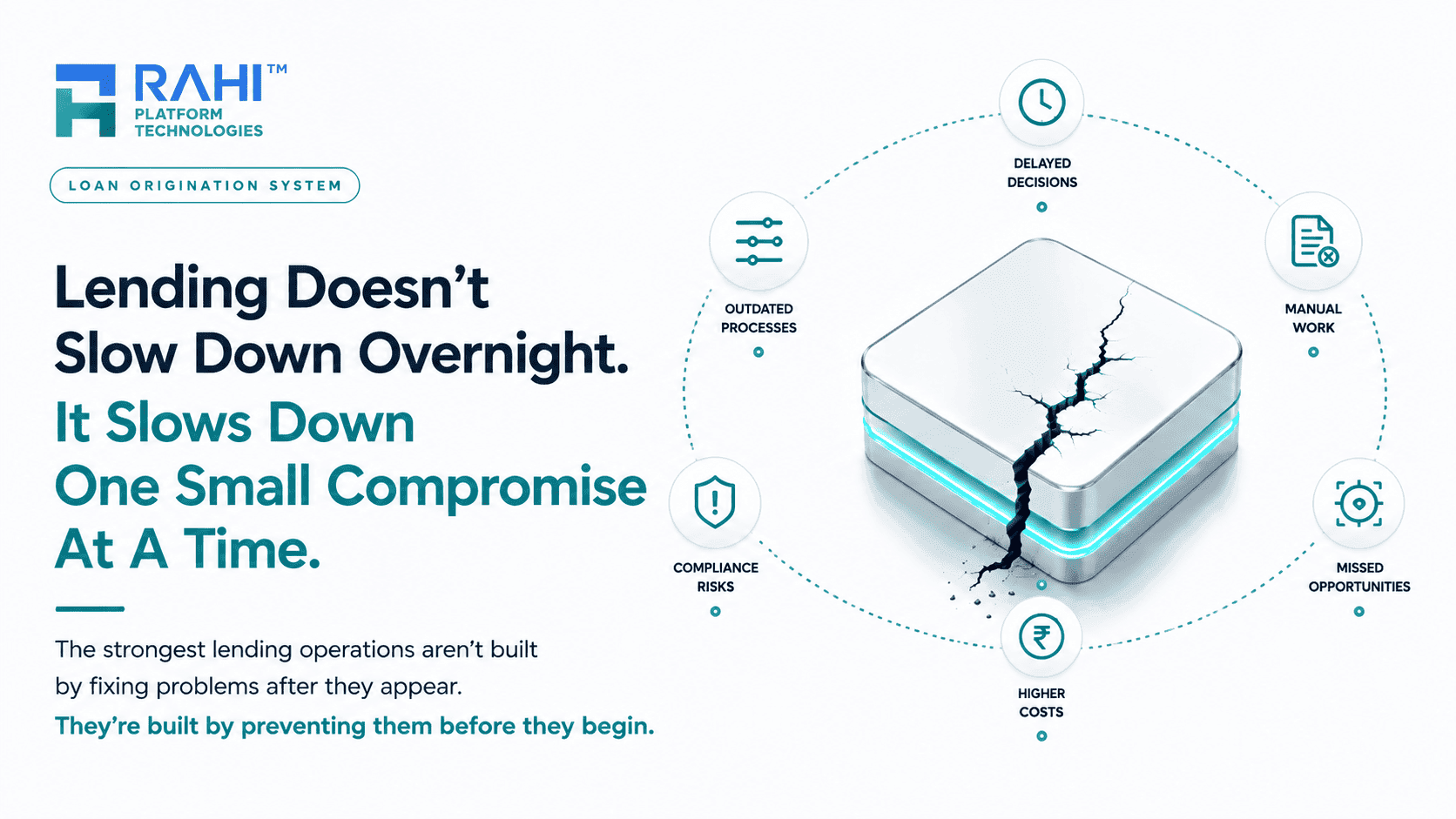
Lending Doesn't Slow Down Overnight. It Slows Down One Small Compromise At A Time
Applications continue to arrive. Teams continue to process them. Decisions continue to be made. From the outside, lending operations appear to be moving exactly as they should. Yet over time, approval cycles become longer, operational costs begin to rise, manual interventions increase, and maintaining consistency across the lending process becomes increasingly difficult. These changes rarely happen because of a single operational failure. Instead, they emerge through a series of small compromises that gradually become embedded in day-to-day operations.
Read article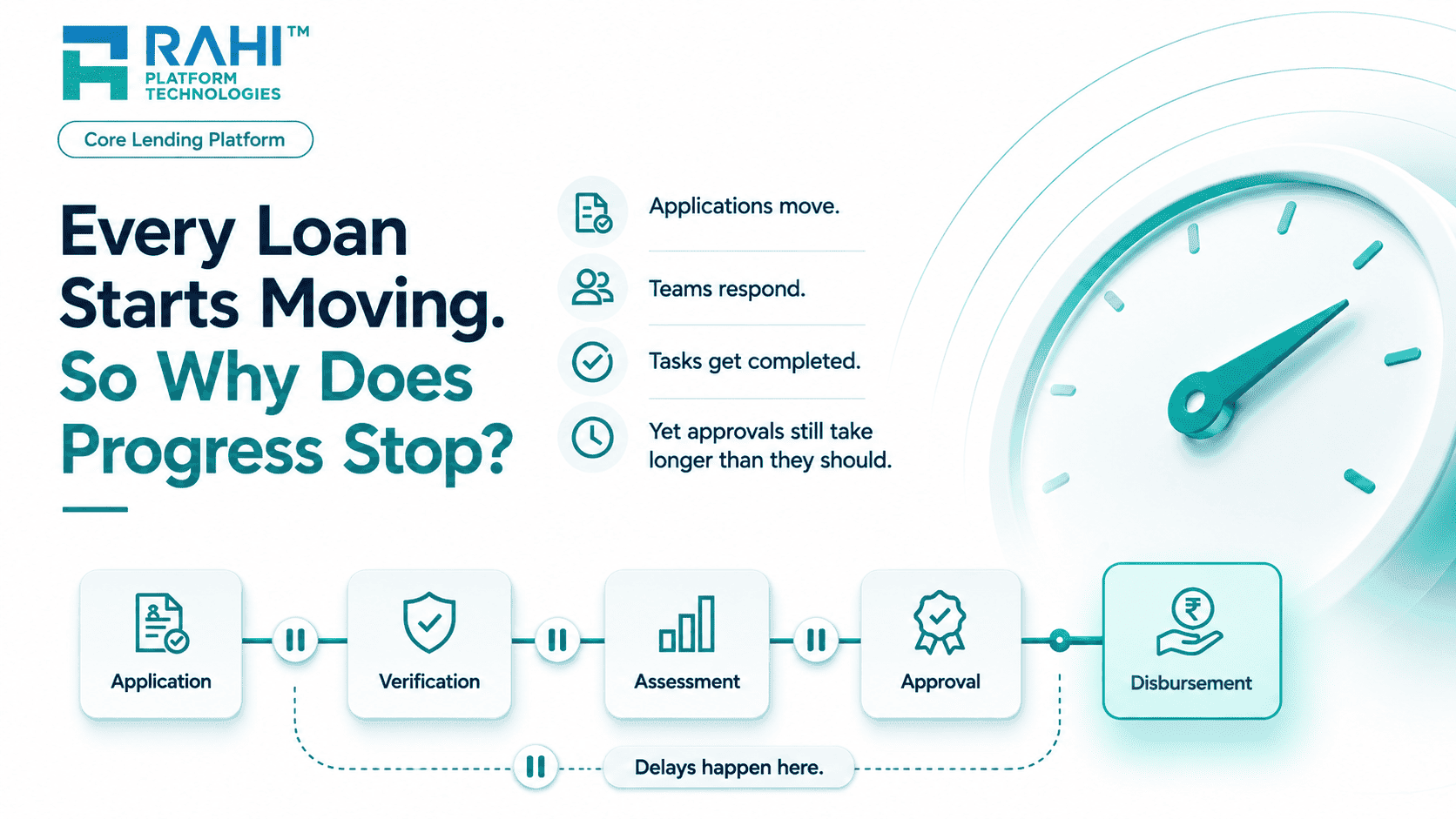
Every Loan Starts Moving. So Why Does Progress Stop?
Every lending institution is built around momentum. An application is submitted. Information is captured. Documents are verified. Credit is assessed. Decisions are made. Funds are disbursed. Each stage has a clear purpose. Each team has defined responsibilities. Each process is designed to move the customer one step closer to a lending decision.
Read article
The Account Wasn't Lost Overnight
A missed payment is rarely the beginning of a collections challenge. More often, it is the moment when underlying operational gaps finally become visible. By the time an account reaches delinquency, a series of borrower interactions, collection activities, follow-ups, repayment commitments, field visits, and operational decisions have already influenced the outcome. Recovery is not determined by a single event—it is shaped by everything that happens before it.
Read article
Every loan is talking. Are your systems listening?
Every loan begins with a purpose. For a borrower, it may represent the opportunity to expand a business, purchase a home, finance education, or meet an important financial need. For a lender, it represents much more than a disbursed amount. It becomes a long-term operational responsibility that requires continuous monitoring, timely servicing, regulatory compliance, and consistent customer engagemen
Read article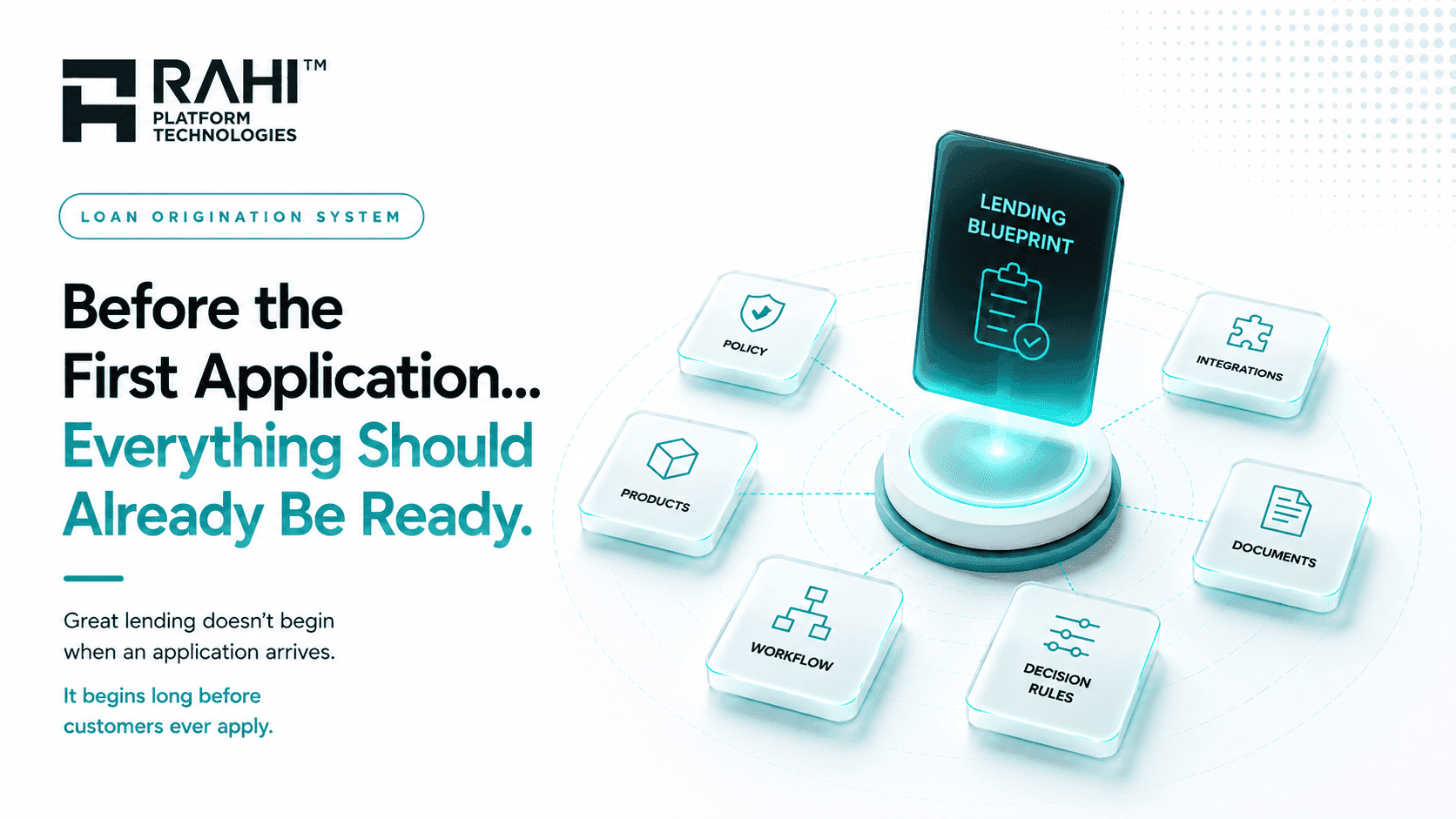
Before the First Application Everything Should Already Be Ready
When people think about lending transformation, the conversation usually starts with the borrower. How quickly can someone apply? How simple is the application journey? How fast can a decision be delivered?
Read article
Everyone Has Their Piece. But Who Owns the Whole Picture
Every lending institution has invested in technology. There is a platform for loan origination. Another for credit evaluation. A separate system for loan servicing. Dedicated tools for collections, customer engagement, reporting, and analytics.
Read article
This Notication Changed Everything.
Every collection team has experienced this moment. A notification appears. Escalation Triggered. 23 Accounts Need Immediate Attention.
Read article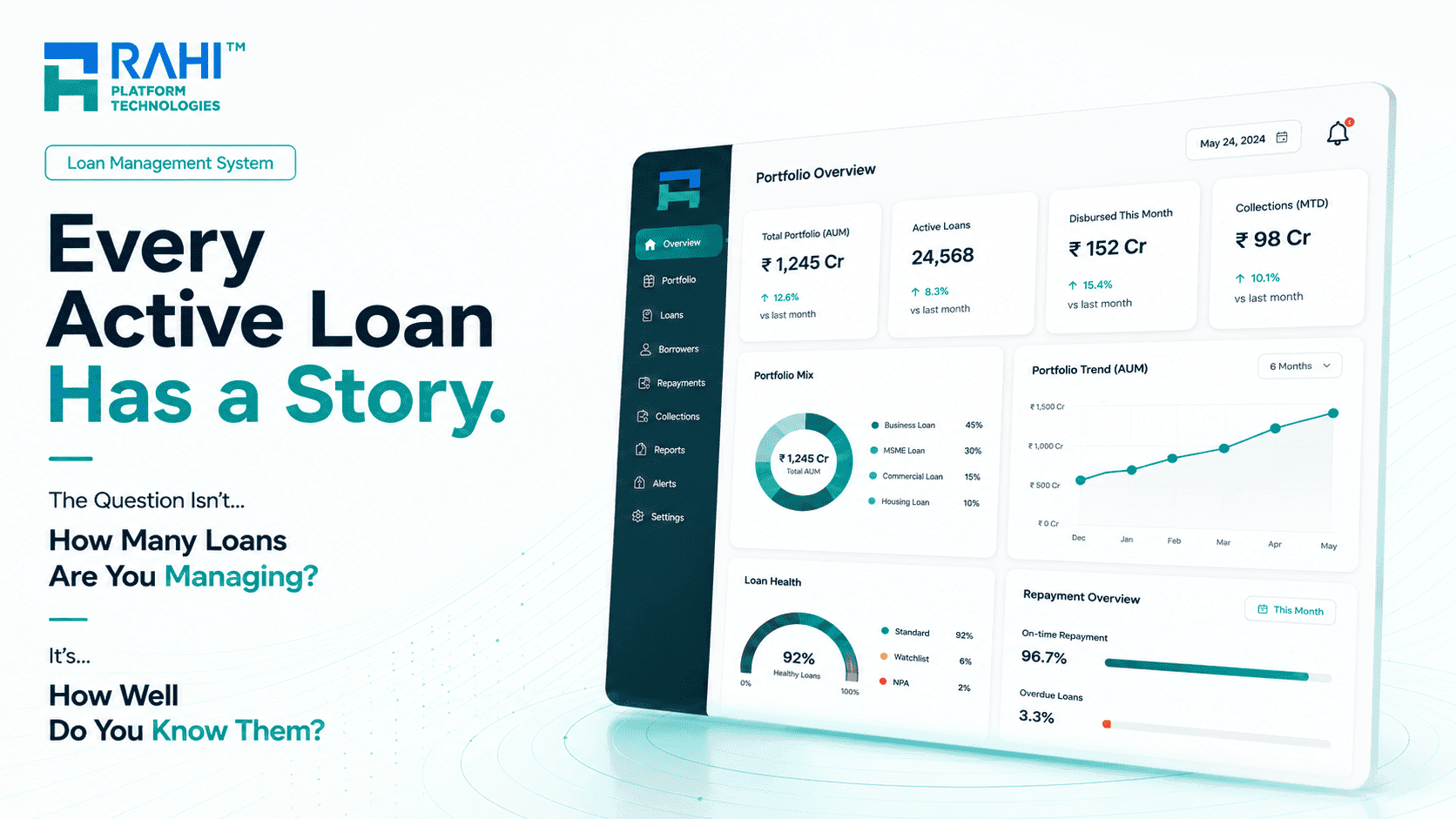
Every Active Loan Has a Story
For many lenders, success is often measured by numbers. How many loans were disbursed this month? How fast is the portfolio growing? How many borrowers are active today? These are important business metrics. They show growth and scale. But they don't tell the complete story. The real challenge begins after a loan is disbursed.
Read article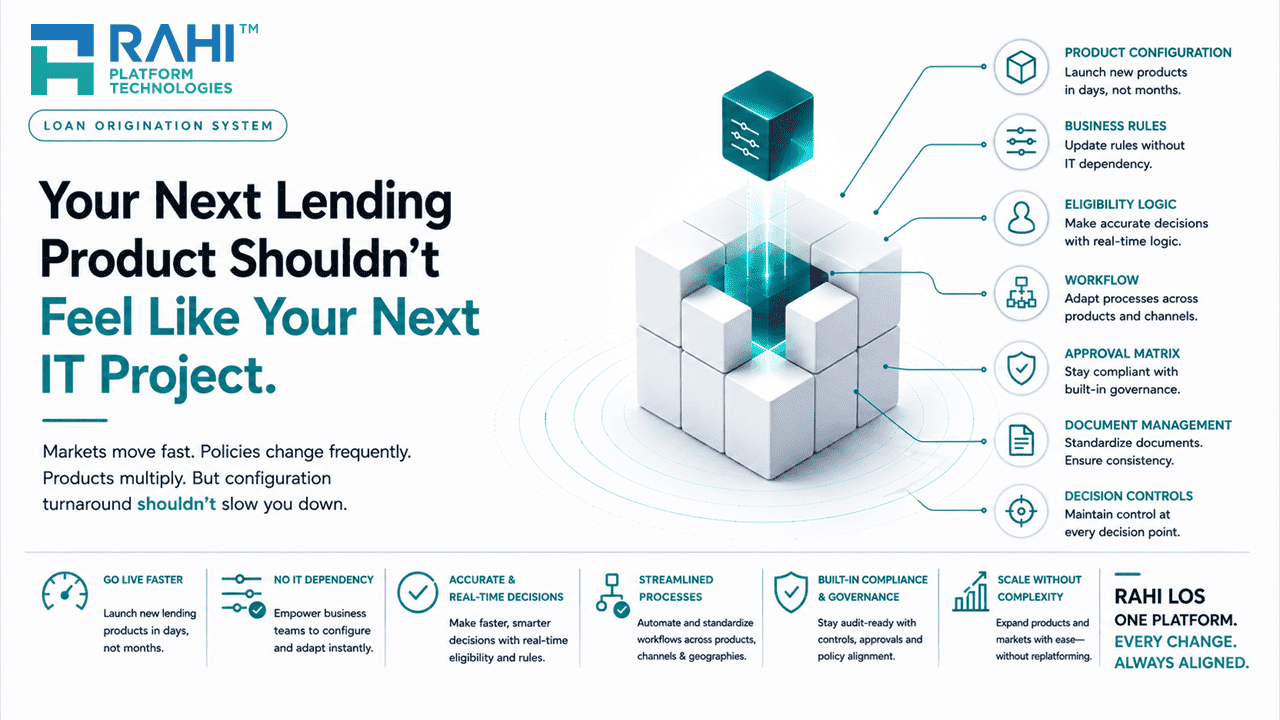
Your Next Lending Product Shouldn't Feel Like Your Next IT Project
Every lending institution reaches a point where the business is ready to move, but the technology isn't. A new lending product is approved. A credit policy is revised. A new customer segment is identified. A business opportunity is clear.
Read article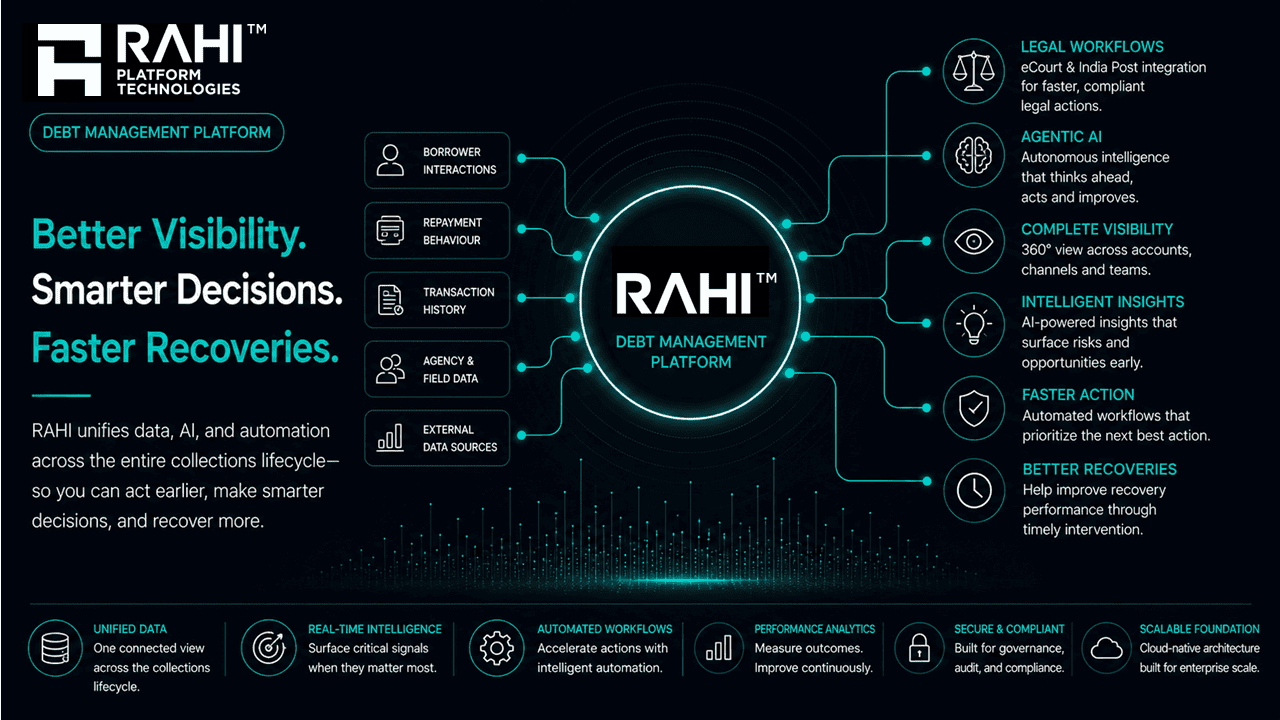
Better Visibility. Smarter Decisions. Faster Recoveries.
Every lending institution generates operational data. Borrower interactions. Repayment behaviour. Agency updates. Field activities. Legal proceedings. Transaction history. External intelligence. The industry doesn't have a shortage of information. It has a shortage of connected visibility. That distinction matters more than ever. Recovery performance is rarely influenced by a single event. It is shaped by hundreds of operational decisions made across multiple teams, systems, and touchpoints every day.
Read article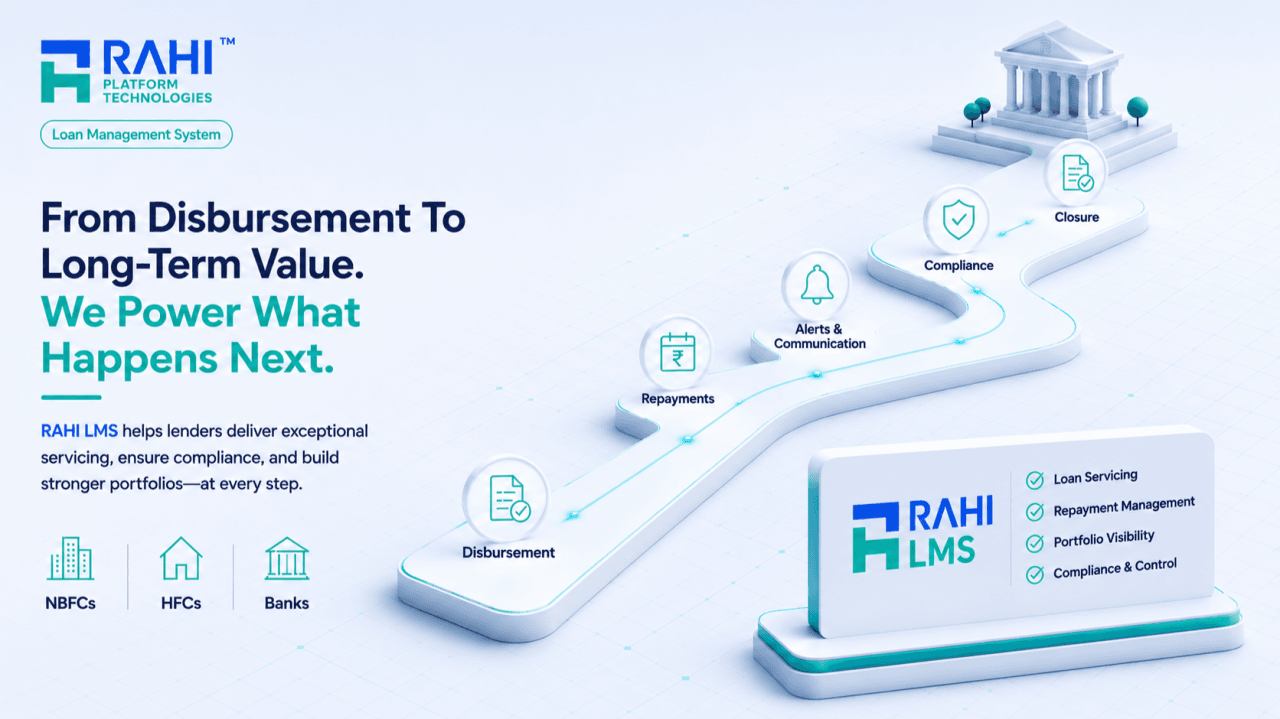
From Disbursement To Long-Term Value We Power What Happens Next
For years, lending transformation has largely focused on one objective—making loan origination faster. Digital onboarding, automated underwriting, instant verification, and accelerated approvals have transformed how financial institutions acquire customers. But once a loan is disbursed, a different operational reality begins. Every repayment collected, every borrower communication, every compliance milestone, every accounting activity, and every servicing request becomes part of an ongoing journey that directly influences portfolio health and customer experience.
Read article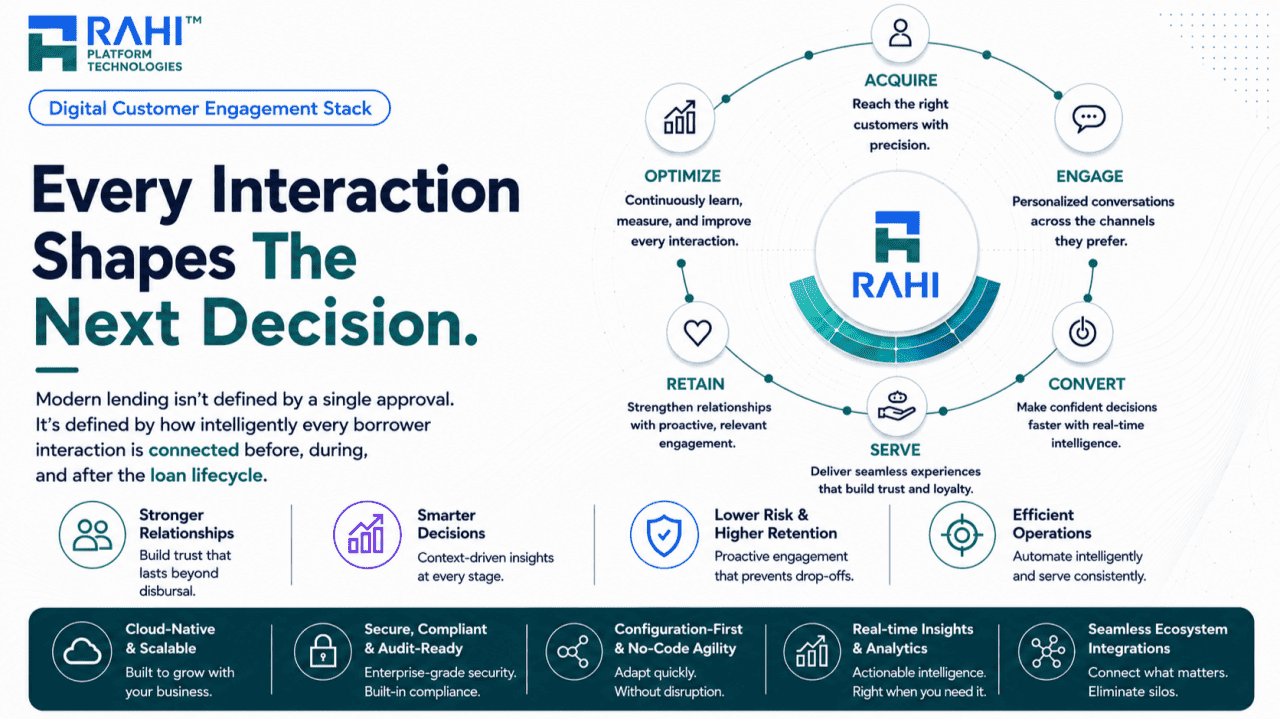
Every Interaction Shapes The Next Decision
Every lending institution measures decisions. Approval rates. Turnaround times. Portfolio quality. Collection efficiency. Customer acquisition costs. Operational productivity. These metrics define performance. But they don't explain why performance improves—or why it declines. Because before every lending decision, there is something far more valuable.
Read article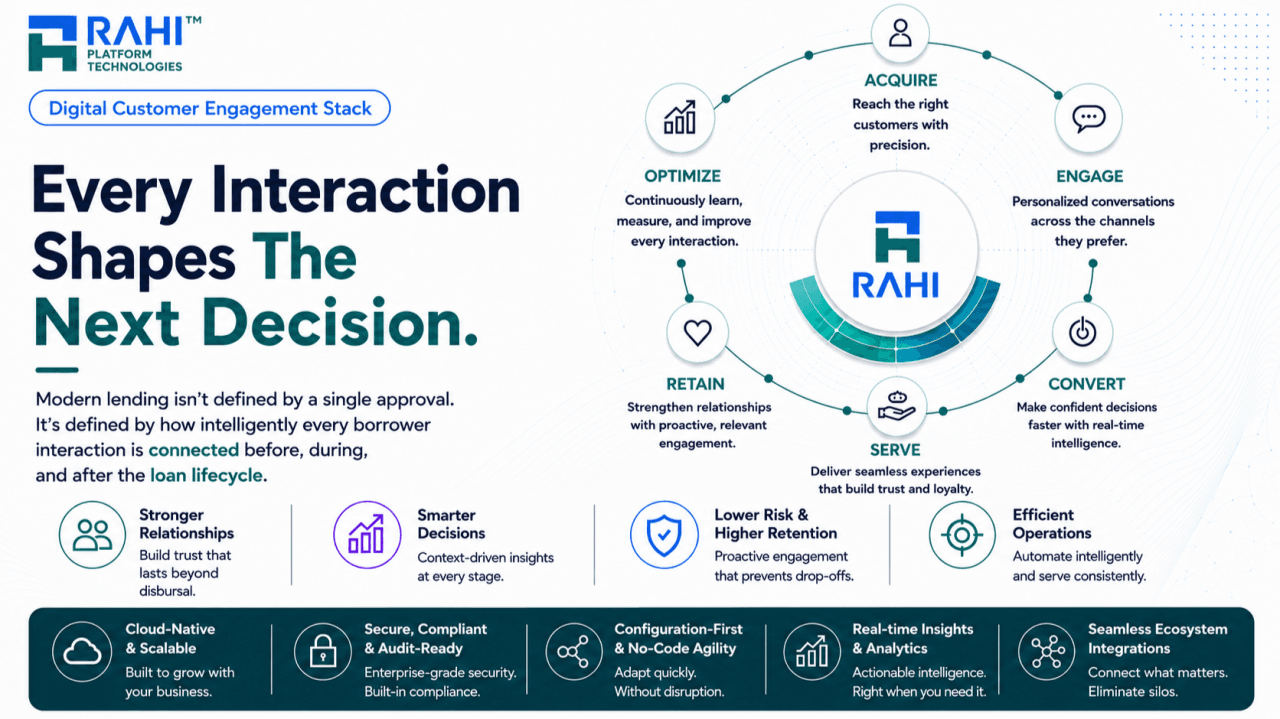
Every Interaction Shapes The Next Decision
Every lending institution measures decisions. Approval rates. Turnaround times. Portfolio quality. Collection efficiency. Customer acquisition costs. Operational productivity. These metrics define performance. But they don't explain why performance improves—or why it declines. Because before every lending decision, there is something far more valuable. An interaction. A borrower opens an application but doesn't complete it. A document is uploaded after the second reminder instead of the first. A servicing request reveals financial uncertainty months before a payment is missed. A customer consistently responds through WhatsApp while ignoring email. An existing borrower explores another product but never submits an application. Individually, these moments appear operational. Collectively, they become intelligence.
Read article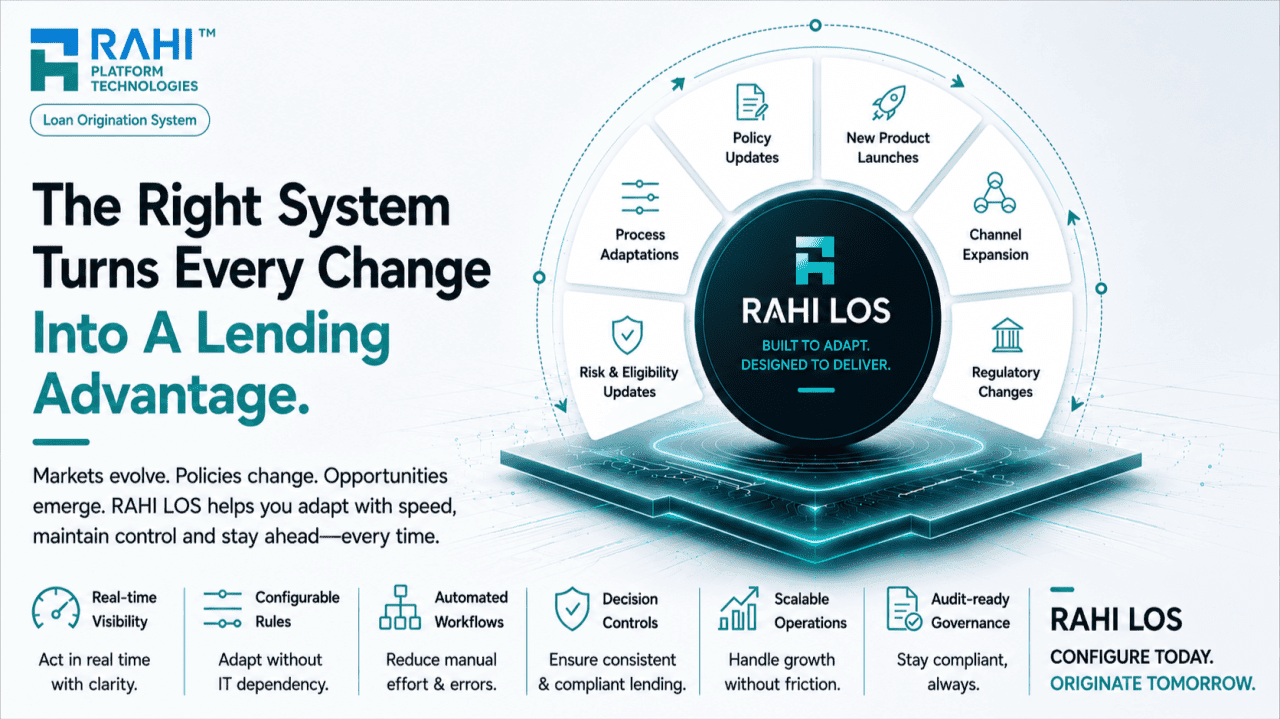
The Right System Turns Every Change Into A Lending Advantage
Every lending institution is built to evolve. Some changes are driven by business ambition. Others are driven by regulation, competition, or changing borrower expectations. New products are introduced. Credit policies are refined. Distribution channels expand. Risk frameworks mature. Approval structures evolve. None of these changes are unusual.
Read article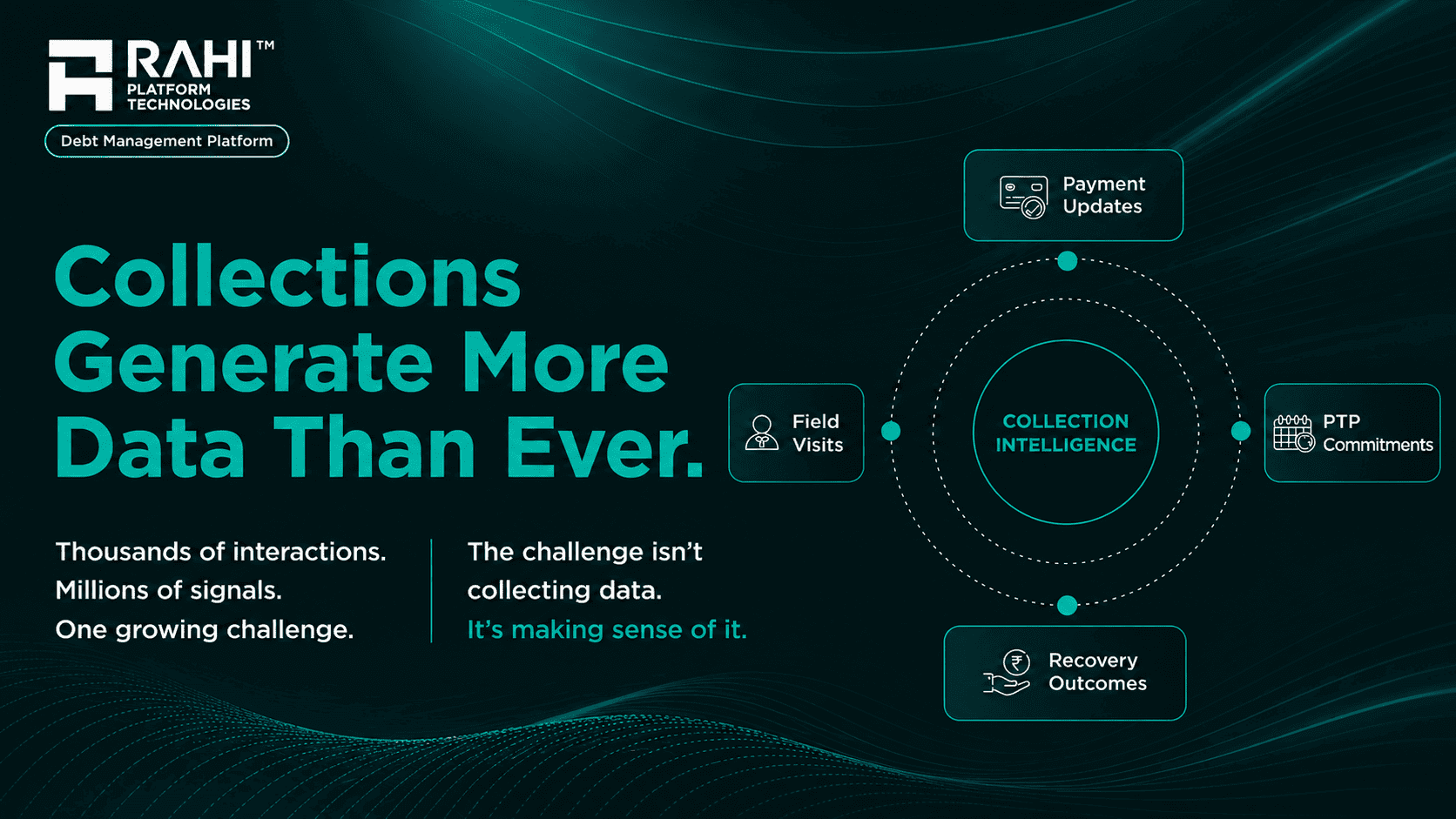
Collections Generate More Data Than Ever. Are Organizations Using It Effectively?
Modern collection operations have become one of the richest sources of operational intelligence within lending. Every borrower interaction, payment update, field visit, promise-to-pay, digital engagement, and recovery outcome generates valuable data. As lending portfolios continue to expand, so does the volume of information flowing through collection ecosystems.
Read article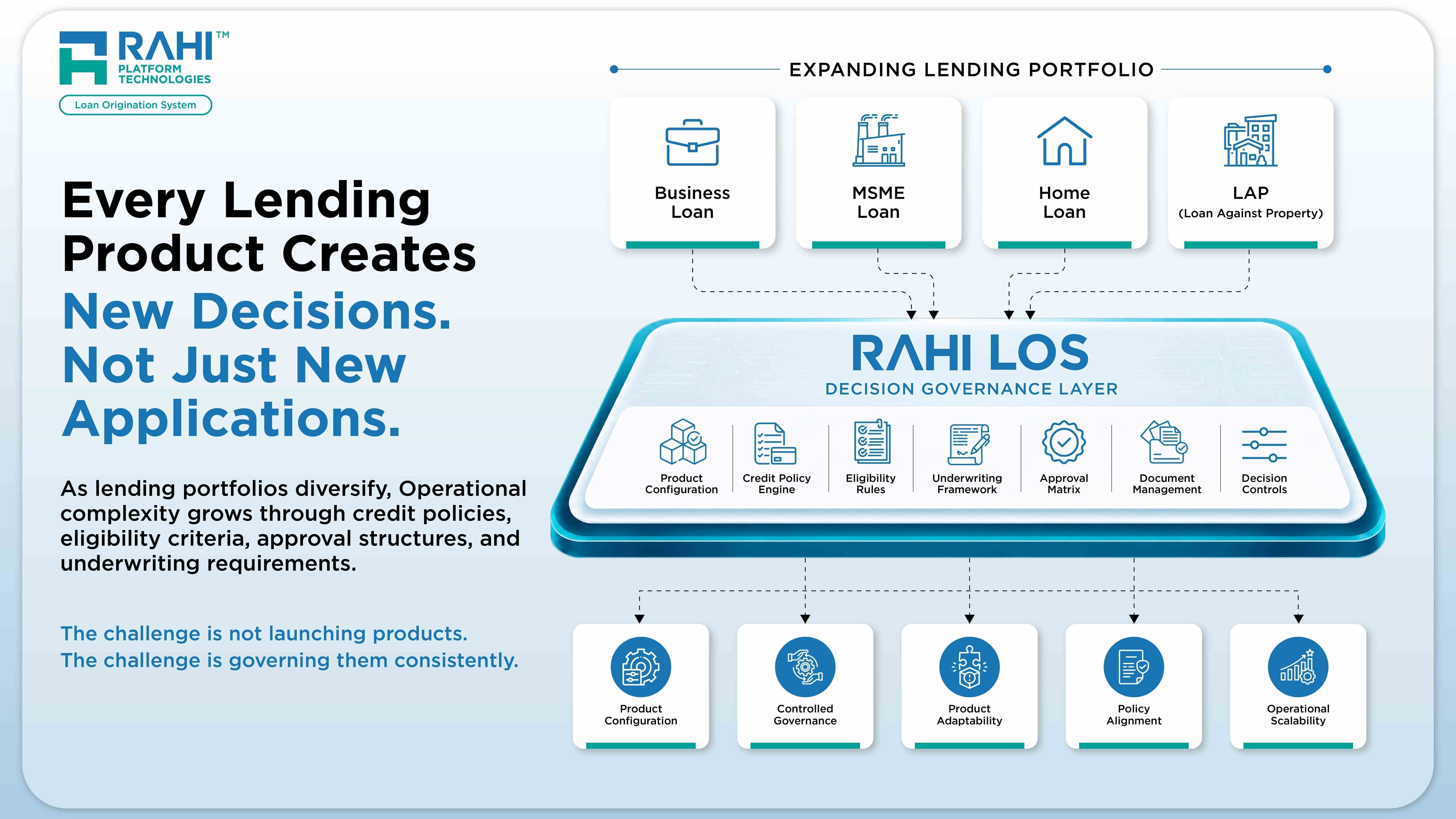
Every Lending Product Creates New Decisions. Not Just New Applications.
The lending industry is becoming increasingly diversified. Banks, NBFCs, and Housing Finance Companies are expanding beyond a single lending product to serve broader customer segments and unlock new growth opportunities. Business Loans. MSME Lending. Housing Finance. Loan Against Property (LAP). Each product serves a different borrower need. Each product addresses a different market opportunity.
Read article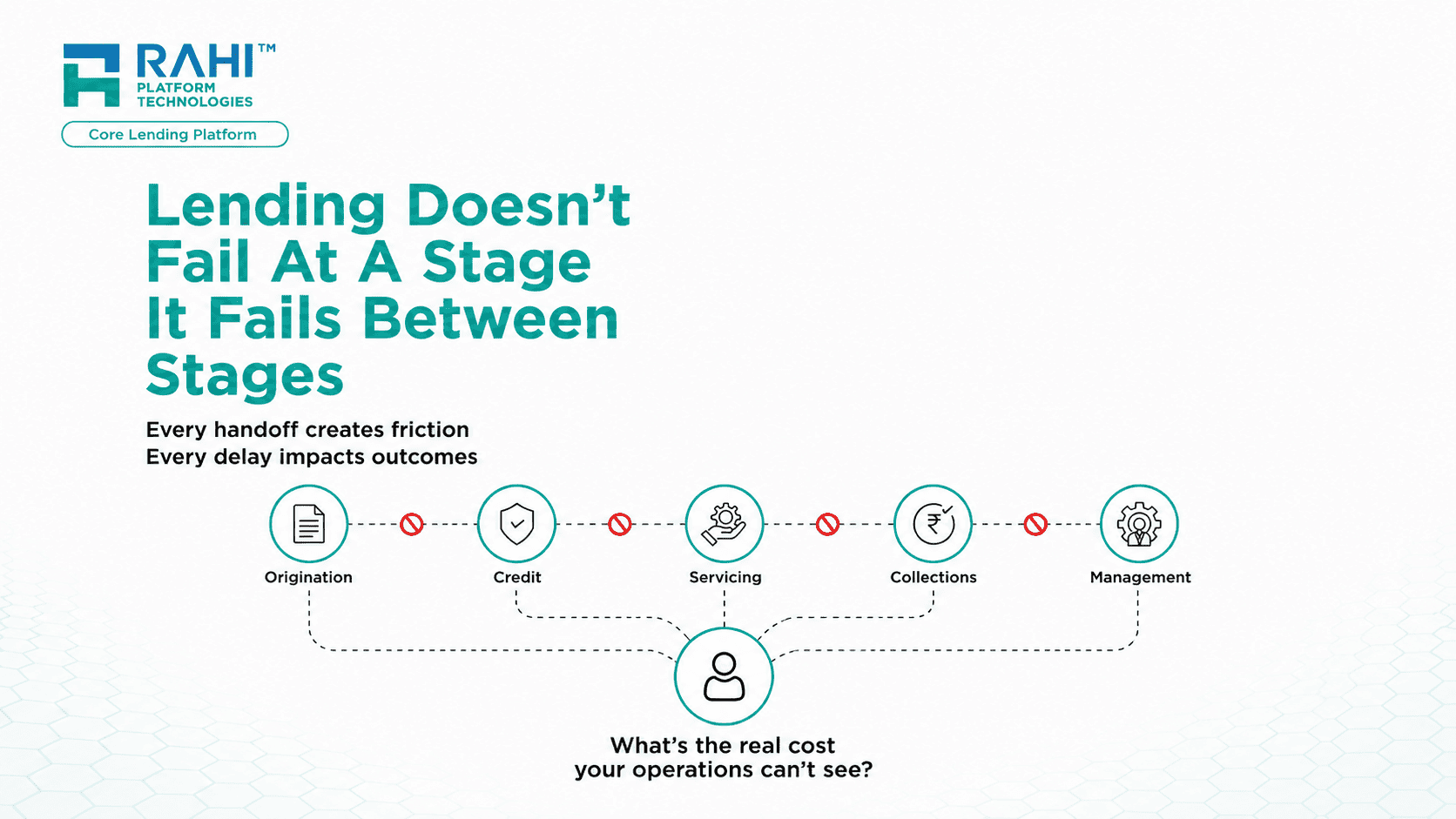
Lending Doesn't Fail at a Stage It Fails Between Stages
For decades, financial institutions have focused on optimizing individual stages of the lending lifecycle. Loan origination systems have become more sophisticated. Credit policies have become more intelligent. Servicing operations have become increasingly automated, and collections teams have adopted advanced recovery strategies.
Read article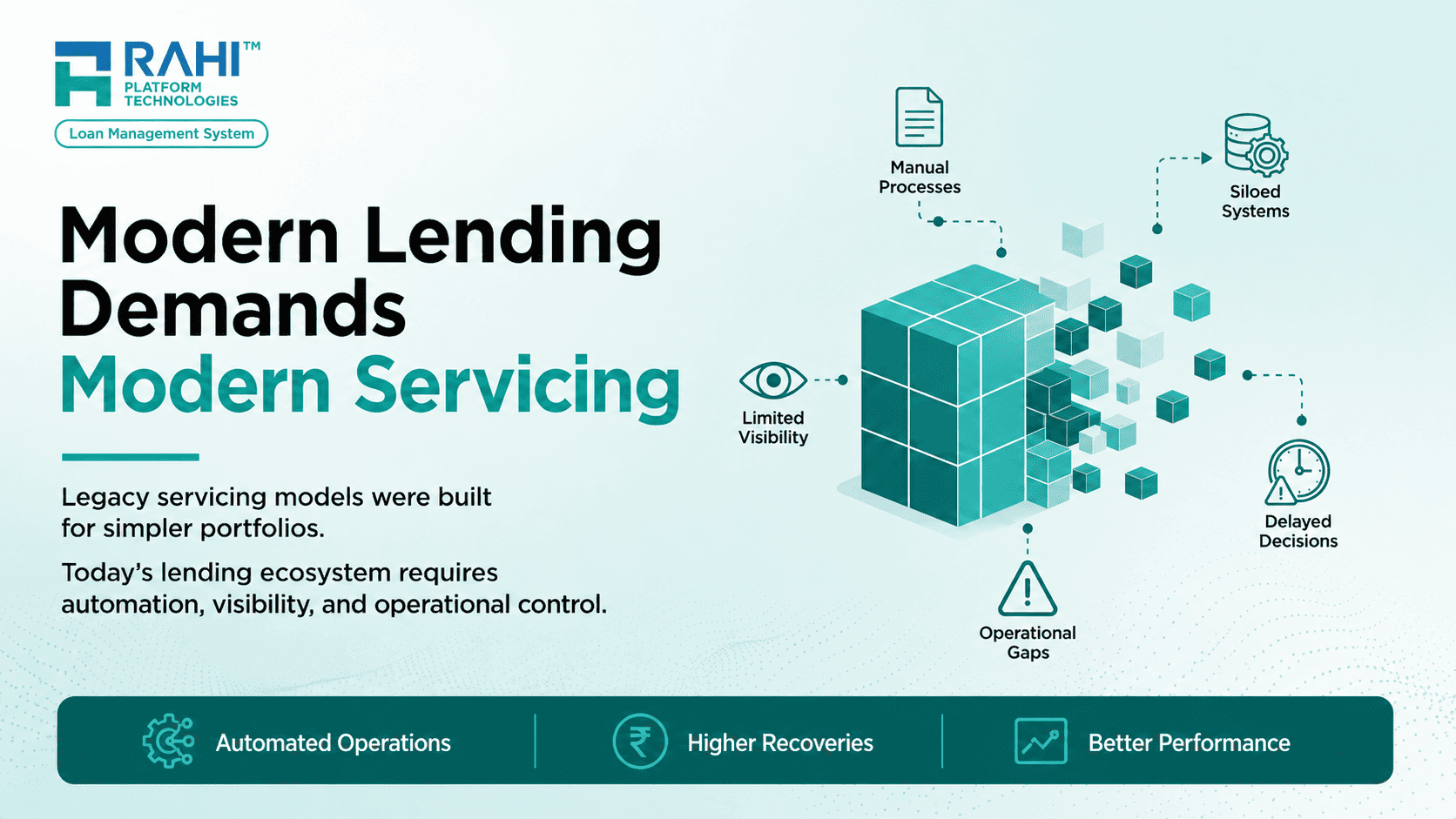
Modern Lending Demands Modern Servicing
Lending has entered a new era where speed, precision, and operational agility are no longer competitive advantages—they are business imperatives. As lending portfolios diversify and customer expectations continue to rise, financial institutions are under increasing pressure to manage complex servicing operations while maintaining compliance, reducing costs, and delivering a seamless borrower experience. In this evolving landscape, loan servicing has become far more than an operational function. It is the foundation of portfolio performance, customer retention, risk management, and long-term business resilience. Yet many institutions
Read article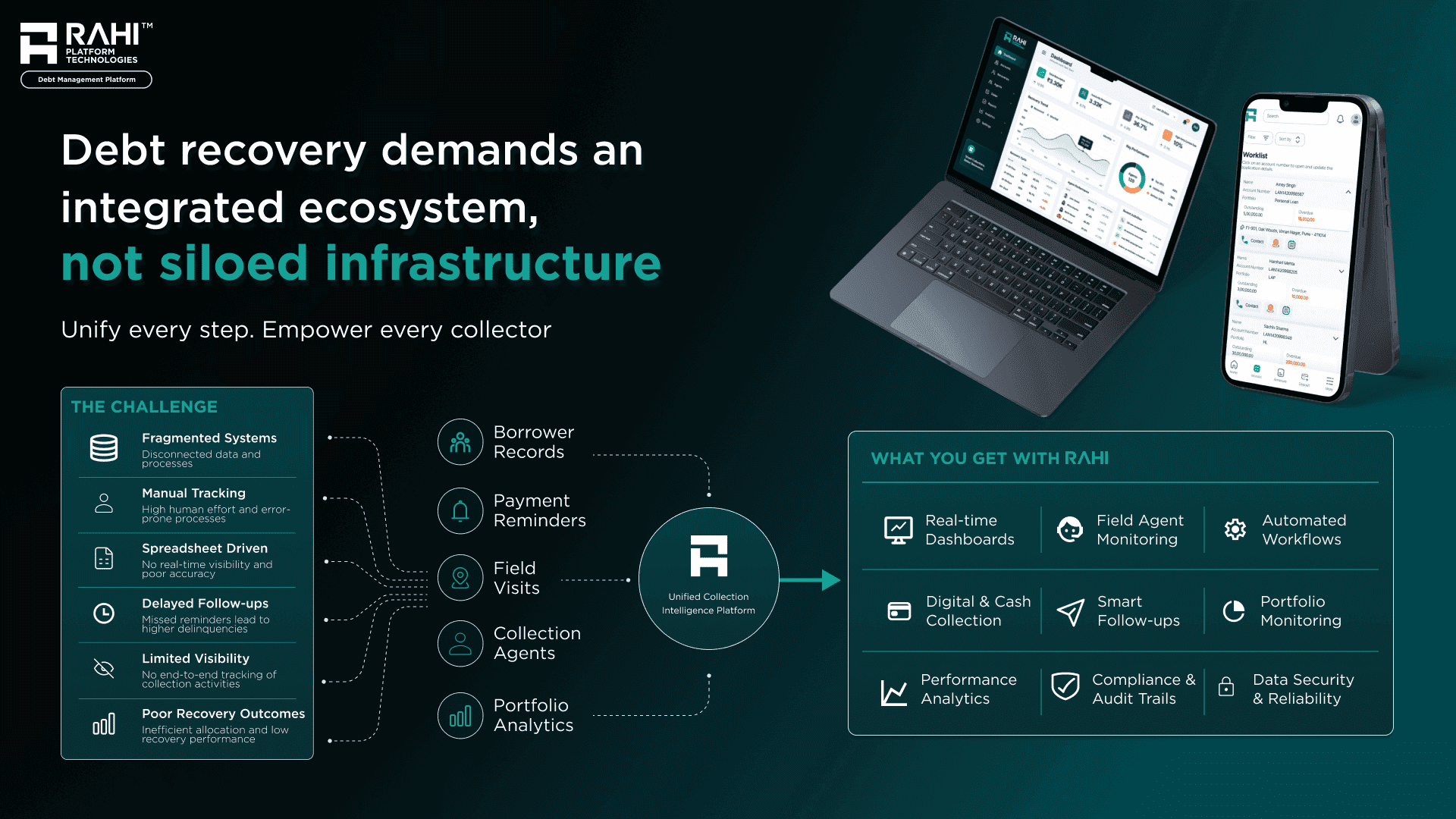
Collections Have Evolved. Why Are Systems Still Siloed?
For many years, debt collection has been viewed primarily as a recovery function. But in today's lending landscape, it has evolved into something much larger—an operational discipline that directly impacts profitability, customer experience, compliance, and business sustainability. As NBFCs and HFCs continue to expand their portfolios, the complexity of managing collections has increased significantly. Borrower expectations have changed, regulatory oversight has become stronger, and organizations are expected to make faster, data-driven decisions.
Read article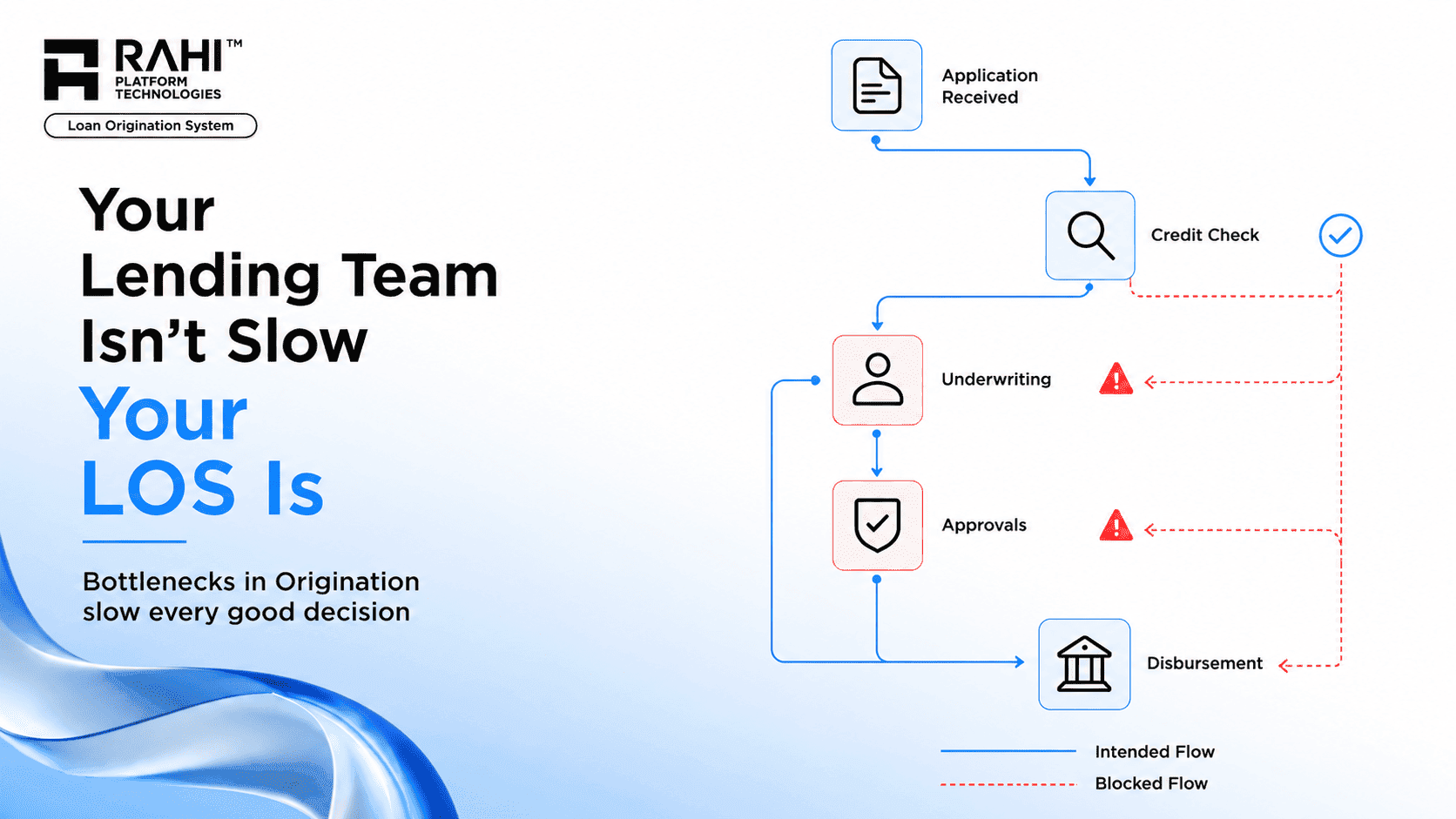
Your Lending Team Isn't Slow Your LOS Is
Every lending institution strives to achieve the same objective: evaluate applications efficiently, make consistent credit decisions, and deliver a seamless borrowing experience without compromising governance or compliance. Yet, despite investing in experienced lending teams, well-defined credit policies, and established operational processes, many financial institutions continue to struggle with delays across the loan origination journey.
Read article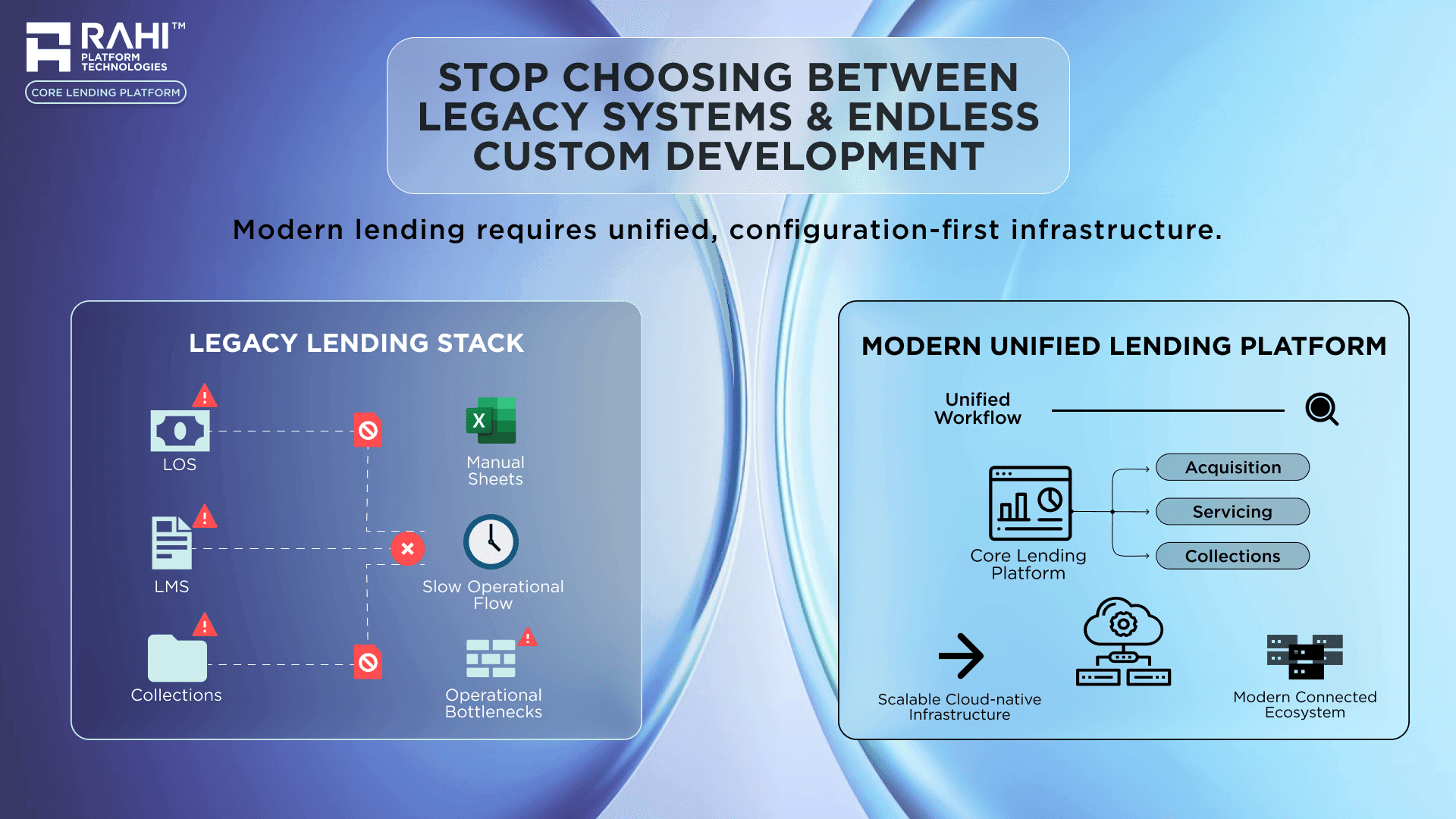
Stop Choosing Between Custom Development and Rigid Legacy Lending Systems
For years, financial institutions have been trapped in an impossible technology decision. On one side: Expensive, rigid legacy lending platforms that are difficult to customize, slow to evolve, and costly to maintain. On the other: Endless custom development projects that consume months of effort, stretch budgets, create operational dependency, and still struggle to deliver long-term scalability. For most Banks, NBFCs, and Housing Finance Companies, this has become the hidden operational tax of lending transformation.
Read article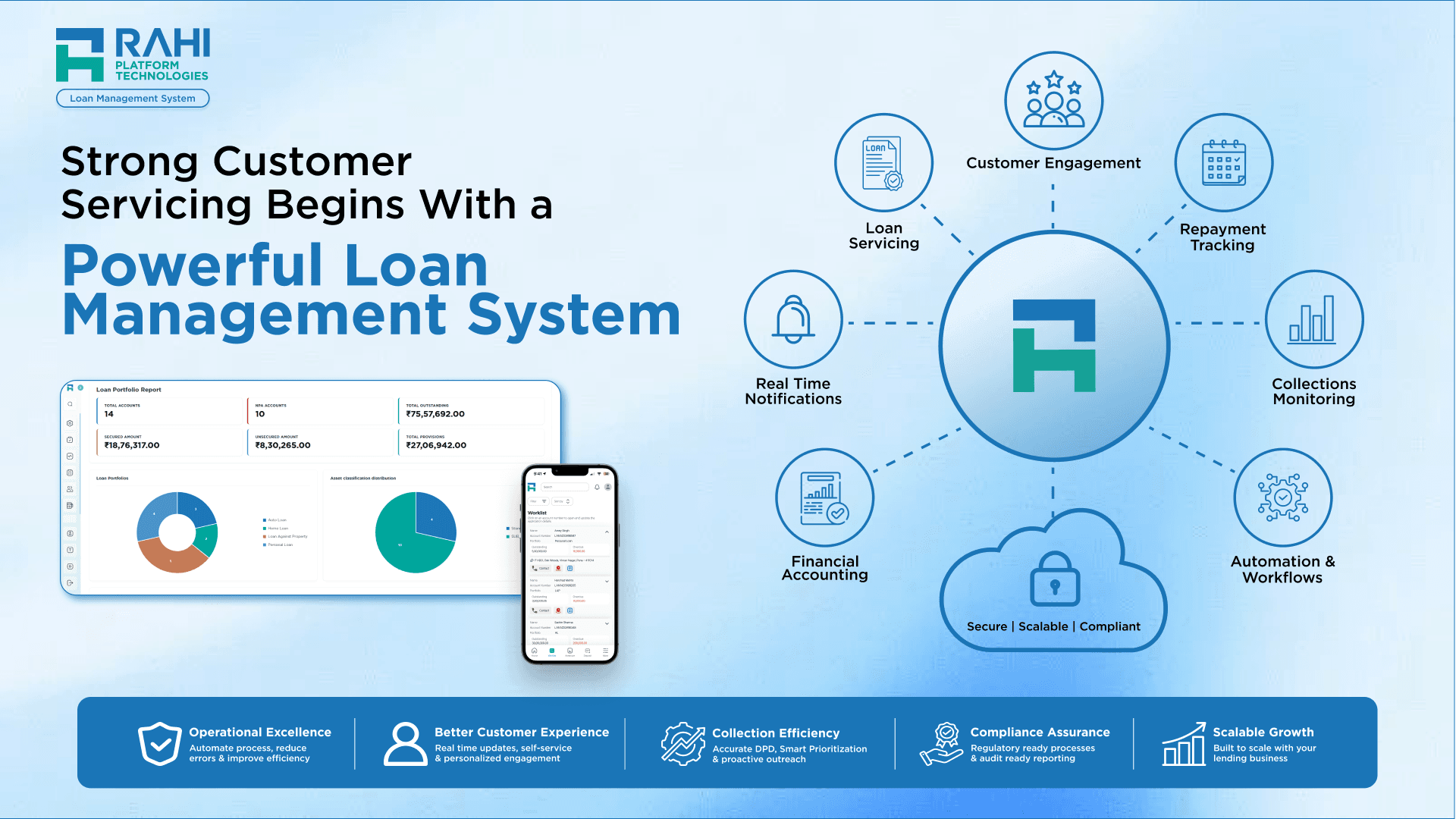
The Real Challenge in Lending Begins After Disbursement
Most conversations in lending revolve around acquisition. Faster onboarding. Smarter underwriting. Instant approvals. Digital journeys. But the real operational complexity starts after the loan is disbursed. Because disbursing a loan is a moment. Managing it is a multi-year operational responsibility. Every repayment, every schedule adjustment, every restructuring request, every accounting entry, every delinquency movement, and every customer communication becomes part of a continuous servicing lifecycle.
Read article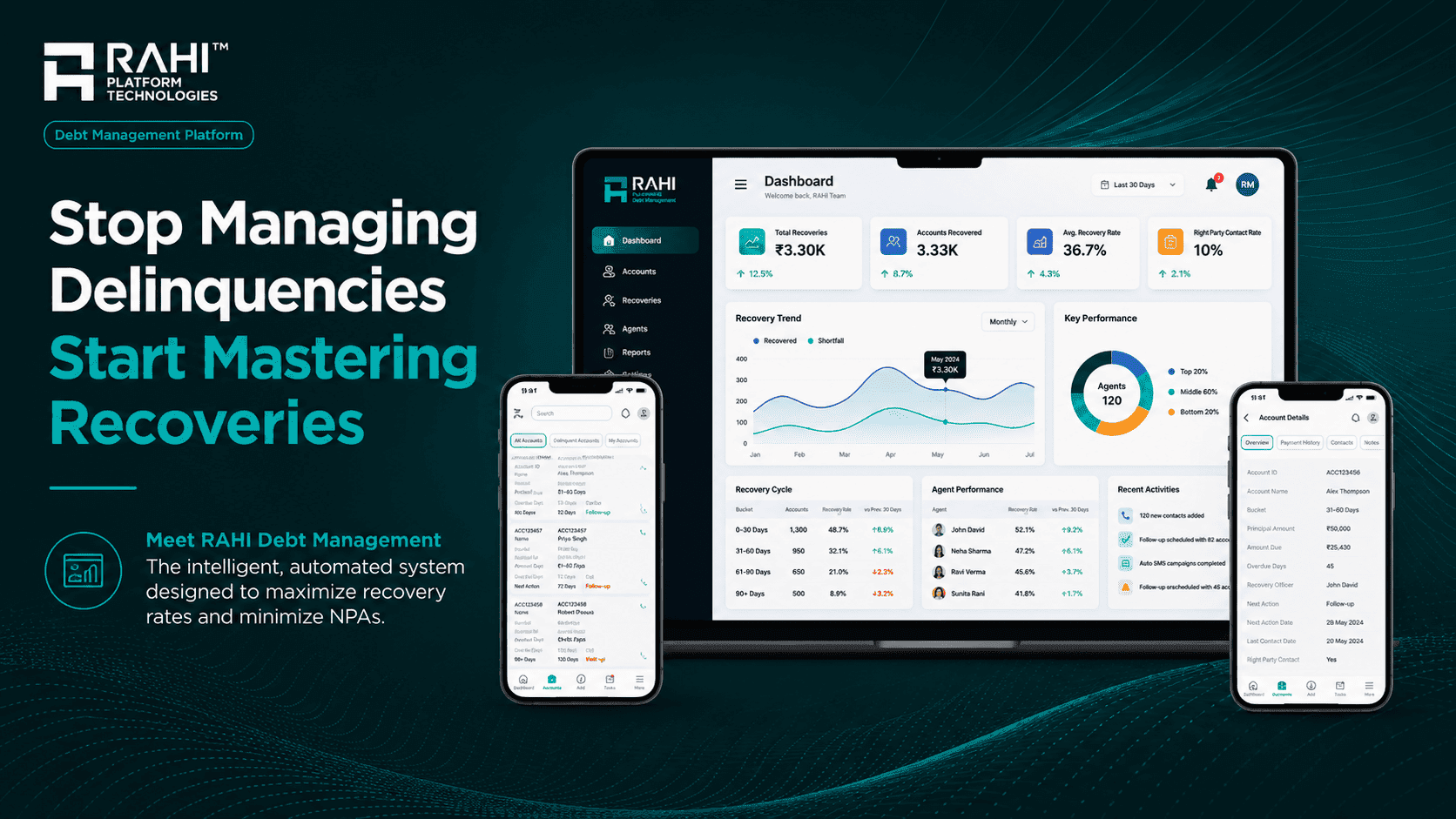
Stop Managing Delinquencies. Start Mastering
For years, debt collection has been viewed primarily as a recovery function. Today, it has evolved into a strategic business operation that directly influences portfolio performance, operational efficiency, customer experience, compliance, and long-term profitability. As lending portfolios continue to grow, Banks, NBFCs, and HFCs face increasing pressure to manage higher delinquency volumes while maintaining operational control. Borrower expectations are changing, regulatory requirements are becoming more stringent, and collection teams are expected to make faster, data-driven decisions. The challenge is no longer about collecting more data.
Read article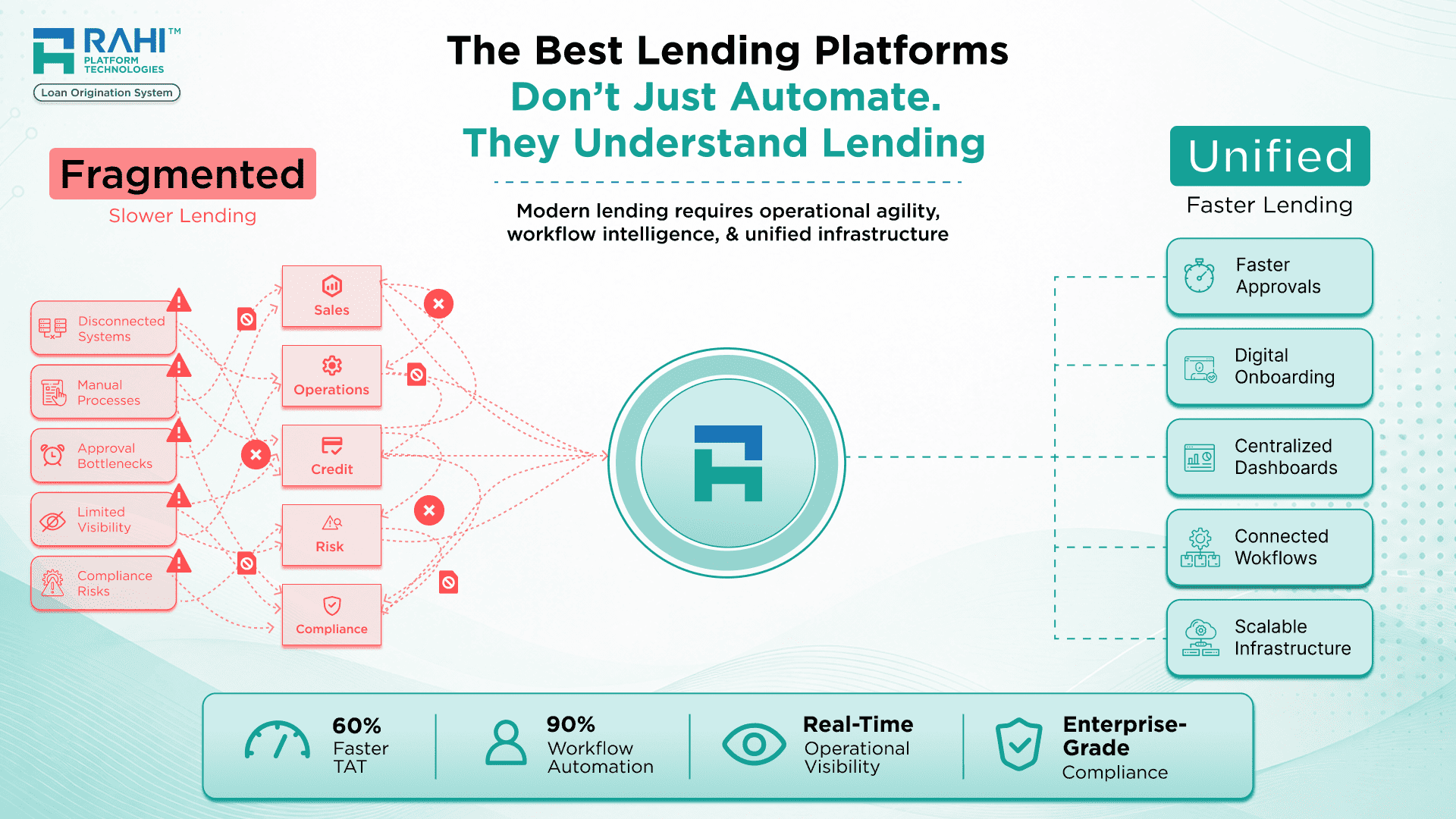
The Best Lending Teams Are Not Working Harder. They’re Working on Better Systems.
A customer submits a loan application. Sales follows up immediately. Operations start collecting documents. Credit waits for verification. Risk asks for another check. Compliance requests clarification. Business teams want faster approvals. And somewhere in between, the loan journey slows down. Not because teams are inefficient.
Read article